











Share
Back to All News & Events
Medical Matters: reflections on Indigenous leadership in health care
Back to Messenger
Medical Matters, September Messenger 2026 |
Posted September 17, 2026
Read time: 3 minutes
By Dr. Nicole Cardinal and Dr. Tibetha Kemble, PhD
CPSA’s Path to Truth and Reconciliation1 was co-created with guidance from an Indigenous Advisory Circle, whose voices continue to help ground and guide this work. In the lead-up to the National Day for Truth and Reconciliation on Sept. 30, we invited Dr. Nicole Cardinal and Dr. Tibetha Kemble, PhD, leaders within the Circle, to share their perspectives on reconciliation, Indigenous health and the relationships needed to support meaningful change across the health system.
Reconciliation is sometimes thought of as a destination or a singular achievement. We invite you to understand it as an ongoing practice—one that requires continuous learning, reflection, relationship building and action. Reconciliation is not a single initiative or outcome; it is an ongoing commitment to building respectful relationships, addressing systemic inequities and creating accountability for change. At CPSA, this commitment is reflected in the work of the Indigenous Advisory Circle and the organization’s broader efforts to advance reconciliation in meaningful and sustainable ways.
The disparity in life expectancy between Indigenous and non-Indigenous Peoples in Alberta2 highlights the inequities that continue to exist within our health systems and our society. It underscores the work that remains to be done and serves as a call to action for all of us to contribute to meaningful change.
Indigenous leadership shapes stronger health systems, and Indigenous perspectives often emphasize relationships, responsibilities, reciprocity and accountability to community. These perspectives offer important insights for healthcare leaders and professional regulation, particularly as we work to strengthen trust and improve health outcomes for Indigenous Peoples.
While regulation is often associated with standards, oversight and compliance, trust is ultimately built through relationships. A relational approach considers not only whether minimum standards were met but also asks how health care is experienced by people and communities as a whole.
Creating space for Indigenous voices, perspectives and rights within decision-making is an important part of this work. Meaningful engagement goes beyond consultation. It involves shared learning, mutual respect and partnership. Any path forward must be co-developed with Indigenous Peoples. Progress requires Indigenous voices, perspectives and leadership to be included in decision-making processes from the outset, rather than being consulted after decisions have already been shaped. When Indigenous perspectives are included in conversations about health care and regulation, we all gain a deeper understanding of the experiences, priorities and needs of the communities we serve.
The Indigenous Advisory Circle plays an important role in supporting CPSA’s journey toward reconciliation. Establishing the Circle was a meaningful step toward reconciliation, creating a dedicated space for Indigenous guidance, perspectives, and relationship building within the organization. Through ongoing guidance, the Circle helps CPSA reflect on Indigenous rights, perspectives and experiences in ways that will help strengthen public trust and ultimately contribute to better health outcomes for First Nations, Inuit and Métis Peoples.
This work is not limited to organizations. Physicians, physician assistants and health system partners all have a role to play in advancing culturally safe, respectful and relationship-based care.
As health care continues to evolve, clinical excellence will always remain essential. Equally important is our collective ability to build trust, honour relationships and create systems where Indigenous Peoples feel respected, safe and seen. The future of health care depends on both.
1 CPSA’s Path to Truth and Reconciliation is a regulatory action plan that advances safe and high-quality health care for First Nations, Inuit and Métis Peoples by examining the regulator’s role in historical and ongoing harms, strengthening standards, seeking ongoing input from Indigenous communities and health leaders, and supporting regulated members in providing respectful, culturally safe care.
2 According to Alberta Health data from 2023, life expectancy for First Nations in Alberta was 62.8 years compared with 81.9 years for non-First Nations Albertans, a gap of approximately 19 years.
 |
Dr. Tibetha Kemble is nêhiyawipwâtinâhk and a registered member of Piapot First Nation (Treaty No. 4). She is an Indigenous scholar and governance leader whose work centres Indigenous rights, sovereignty and accountability across health, education and research systems, with particular focus on Indigenous women, children and families. |
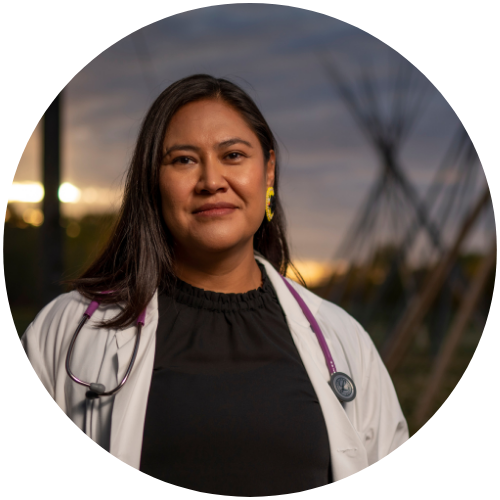 |
Dr. Nicole Cardinal is a First Nation physician from the Saddle Lake First Nation. She is married and has three children. She is currently practising family medicine in her home community of Saddle Lake while also working in St. Paul, Alberta as a rural family physician. Her work includes family medicine clinic, emergency room, continuing care, preceptor to medical students and clinical lead in Postgraduate Education at the Faculty of Medicine at the University of Alberta Wapanachakos (morning star) Program. |
One Response
Related News
All News & EventsSeptember 17, 2026
Medical Matters: reflections on Indigenous leadership in health care
September 17, 2026
New and improved way to inform CPSA of updates to your personal and professional contact information
September 17, 2026
Physician and physician assistants: get ready for your upcoming 2027 annual renewal
September 17, 2026
There is so much work to be done. Relationships are key to setting up, delivering, and evaluating services. Delivering services directly in communities is the most rewarding part of my practice. I encourage others to reach out, build relationships, and deliver care directly.